
What signs point to gum surgery?
| Question | Gum graft at a glance |
|---|---|
| What it treats | Receding or thin gums over exposed roots |
| Anaesthesia | Freezing (local anaesthetic) numbs the area |
| Main risks | Infection, heavy bleeding, a graft that does not take |
| Recovery | One to two weeks on average, per Cleveland Clinic |
| Not the first step for | Gums with active gum disease that is not yet under control |
The exam comes first. The dentist tells you whether a graft here or a referral suits your gums.
Exposed roots and gums that keep pulling back are the main signs that point to a gum graft. Book an exam if you notice:
- Exposed tooth roots or teeth that look longer
- Gum recession or thinning gum tissue
- Sensitivity to hot or cold
- Spaces forming between teeth
- Frequent bleeding or inflammation
- Loose or shifting teeth
- Chronic bad breath linked to gum disease
The last four are signs of gum disease, which needs treatment before any graft. Only an exam shows which treatment you need.
What gum therapy comes before surgery?
Gum therapy in Vaughan at My City Dental starts without surgery when gum disease is behind the recession. Gum disease treatment comes first, so the infection is under control before anyone operates on the gum.
Deep pockets below the gumline call for scaling and root planing, a deep cleaning of the roots. Recession can also come from brushing too hard. A soft brush and a gentle stroke remove that cause.
Tell the dentist about every medical condition and medicine you have, since some affect bleeding and healing. The dentist recommends what comes next.
What should you expect during your gum surgery appointment?
A gum graft at My City Dental is done with freezing (local anaesthetic). Cleveland Clinic describes these steps for a typical graft:
- Freezing numbs the teeth and gums in the area.
- The dentist makes a small cut, lifts a flap of gum and cleans the root.
- Graft tissue is placed over the exposed root.
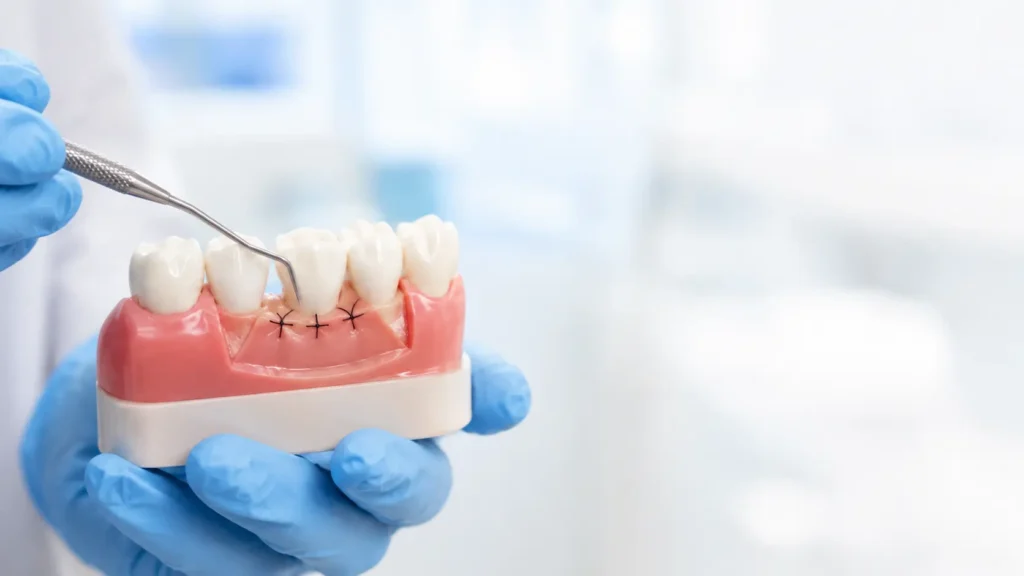
- Stitches hold the graft and the gum in place.
Cleveland Clinic puts a single graft at about an hour. Several grafts take longer.
Does gum surgery hurt?
Gum surgery is done with the area numbed, so you should not feel pain during the procedure. You will feel pressure and movement. Tell the dentist if anything hurts.
Once the freezing wears off, expect soreness at the graft and on the roof of your mouth if tissue came from there. The Canadian Dental Association says you may have the most pain in the first 24 to 48 hours. Call us if your pain is not getting better after 48 hours.
Can you have sedation for gum surgery?
Freezing is enough to numb the area for a gum graft. If you feel nervous, ask the team whether nitrous oxide suits you.
Any sedation can slow your breathing and leave you drowsy, so tell the team about any lung or breathing condition. Nitrous oxide wears off faster than oral sedation, and the team tells you when it is safe to drive.
What are the risks of gum surgery?
The main risks of gum graft surgery are infection, heavy bleeding and a graft that fails to take. Cleveland Clinic describes these complications as uncommon. A graft also may not cover the whole root, and the chance of full coverage drops where bone between the teeth is lost.
Call us right away if you notice:
- Pus at the graft or on the roof of your mouth
- A white patch of tissue lifting away from the tooth
- A fever
- Bleeding that is still heavy 4 hours after surgery
- Swelling that is still getting worse after 48 hours
Call 911 or go to the nearest hospital emergency department if you have trouble breathing or swallowing, swelling that spreads toward your eye or neck, fever with facial swelling, or bleeding that will not stop.
How long does recovery take after gum surgery?
Recovery from a gum graft takes one to two weeks on average, according to Cleveland Clinic. It takes longer when several areas are treated at once. Bleeding usually stops within 24 to 48 hours.
Swelling can build over the first day and last 5 to 7 days, with bruising for up to 10 days. The Canadian Dental Association gives these limits for minor oral surgery. Call us if the swelling has not gone down within 7 days.
Do's
- Use only the mouth rinse the dentist recommends, and ask when to start
- Eat soft, cool foods such as yogurt, eggs and smoothies
- Hold a cold compress on your cheek, 10 minutes on and 10 off, for the first 24 hours
- Brush your other teeth gently
- Go to any follow-up visit the dentist books
Avoid
- Brushing or flossing at the graft until the dentist says it is safe
- Spicy, crunchy, hard or hot foods and hot drinks
- Smoking and alcohol
- Exercise and heavy lifting for at least the first week
Questions while you heal? Call (905) 581-2228.
Is it worth getting gum surgery?
Gum surgery is worth considering when exposed roots are sensitive, decaying or still receding. A graft offers:
- Protection for exposed roots
- Less sensitivity to hot and cold
- A thicker gumline that aims to stop further recession at that tooth
- A lower risk of decay on the root
- A fuller, more even gumline
A graft has limits. It does not treat gum disease, and it does not regrow bone. Cleveland Clinic notes that milder recession may only need monitoring.
When is it too late for gum grafting?
Gum grafting gets less predictable once the gum and bone between the teeth are lost. A widely used grading system, described in a 2024 review in the journal Medicina, expects full root coverage when that tissue is intact. It expects partial coverage when some is lost and no root coverage when the loss is severe.
Even then, the dentist talks with you about what a graft can still do and what else could protect the tooth.
How much does gum graft surgery cost in Ontario?
Published prices at other Toronto-area clinics put a gum graft at about $700 to $1,400 per tooth. Your own cost comes in a written estimate after an exam.
What changes the cost:
- How many teeth need a graft
- Whether the tissue comes from your palate or a donor source
- How much recession each tooth has
- Dental X-rays, when the dentist decides you need them
- Any gum disease treatment needed first
Is gum grafting covered by OHIP?
No. OHIP does not cover dental services provided in a dentist's office, according to the Ontario government. It covers only some dental surgery done in a hospital, such as fracture repair or tumour removal.
Private dental plans may pay part of a graft. My City Dental offers direct insurance billing.
Ask for a predetermination first. It is an estimate of what your plan may pay, not a promise.
Does CDCP cover gum surgery?
My City Dental accepts the Canadian Dental Care Plan (CDCP). Coverage depends on the service and your eligibility, and some services need preauthorization.
The CDCP Dental Benefits Guide lists crown lengthening and bone grafts as not covered. Its gum care section names scaling, root planing and desensitization but not gum grafts. Ask the team to check your coverage before treatment.
Frequently Asked Questions
Can I book gum surgery without a referral?
Yes. You can book a consultation at My City Dental without a referral. The dentist examines your gums and measures how far they have receded.
Dental X-rays are taken when your history and exam show you need them. You then hear whether a graft suits you, what it involves and what it costs, before you decide anything.
When does a dentist refer you to a periodontist?
A dentist refers you on when your gums need more than general dental care. The Canadian Dental Association names two cases: serious gum disease that does not improve with normal care, and bone or gum lost to disease that needs rebuilding.
The dentist you are referred to has at least three years of extra university training in treating gum disease. The dentist at My City Dental tells you whether care here or a referral suits you.
Where does the tissue for a gum graft come from?
Gum graft tissue commonly comes from the roof of your mouth, according to Cleveland Clinic. The dentist takes a small piece from under the surface and closes the spot with stitches.
Some grafts use donor tissue from a licensed tissue bank instead, which skips that second sore spot. Ask the team which source suits your gums.