
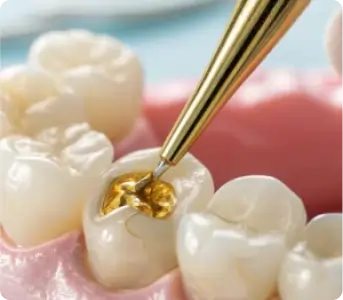
Do I Need a Dental Filling?
A dental filling repairs a tooth damaged by decay, a small fracture or wear. My City Dental provides tooth-coloured dental fillings in Vaughan. The dentist examines the tooth first and tells you if it needs something stronger than a filling.
Key points:
- A filling seals a cavity. New decay can still start at its edge.
- The dentist numbs the tooth first.
- Sensitivity after a filling usually settles within a week or two.
- Published prices at other Vaughan and Toronto-area clinics put a tooth-coloured filling at about $150 to $400 per tooth. Your own cost comes in a written estimate after an exam.
Book an exam if a tooth shows any of these signs:
- Sensitivity to hot, cold or sweet foods
- Sharp pain when you chew
- A hole, chip or dark spot
- Food catching between teeth
Early cavities cause no symptoms, so an exam finds them first.
Why Choose My City Dental for Dental Fillings in Vaughan?
My City Dental is a general dental clinic at 9222 Keele St #5, Vaughan, ON L4K 5A3. For a filling you get:
- Tooth-coloured composite fillings
- An intraoral camera that shows you the tooth on screen
- Digital X-rays only when the dentist decides you need them after your history and exam
- Evening and weekend appointments
- Direct insurance billing and the Canadian Dental Care Plan (CDCP) accepted
- New patients welcome
Dental Filling Aftercare and Recovery
For the first day, avoid very hard foods and very hot drinks. Chew on the other side if the tooth feels tender. Tell the dentist if you grind your teeth.
What Is a Composite Dental Filling?
A composite dental filling is a tooth-coloured filling made from resin and fine glass or quartz particles. The dentist matches the shade to your tooth and bonds the filling to it. Composite contains no mercury. People also call it a white filling or dental filler.
How Much Does a Dental Filling Cost in Ontario?
A tooth-coloured filling costs about $150 to $400 per tooth, based on published prices at other Vaughan and Toronto-area clinics. Your own cost comes in a written estimate after an exam.
A small one-surface filling sits at the low end.
Other Dental Filling Materials
This table is general information. My City Dental's confirmed option is tooth-coloured composite, so ask the team which material suits your tooth.
| Material | What it is | Where it fits | When it is the wrong choice |
|---|---|---|---|
| Composite | Tooth-coloured resin | Small to medium cavities | Very large cavities |
| Glass ionomer | Tooth-coloured, releases fluoride | Areas with little biting force | Large fillings under heavy biting, as it is weaker than composite |
| Amalgam | Silver-coloured metals with mercury | Back teeth with heavy chewing | Front teeth. Health Canada advises limiting it in some groups |
| Ceramic inlay or onlay | Made outside the mouth, then bonded in | More support than a filling, less than a crown | Too little sound tooth to hold it |
Is amalgam safe?
Health Canada's 2020 safety review found no clear link between mercury in dental amalgam and negative health effects. As a precaution, Health Canada's position on dental amalgam advises keeping amalgam use low in children, pregnant women and people with kidney disease. It also says sound amalgam fillings do not need to come out in people with no sign of a health effect.
What Is a Temporary Tooth Filling?
A temporary filling is a short-term seal that protects a tooth until the permanent repair. Call us if one loosens, breaks or falls out.
Dental Filling Procedure
A dental filling follows six steps:
- Exam. The dentist checks the tooth, your old fillings and your bite. The intraoral camera shows you the tooth on screen.
- X-rays when needed. The dentist takes X-rays only when your history and exam show a need.
- Freezing. A local anaesthetic numbs the tooth and the gum around it. Some small and shallow fillings need no freezing.
- Removing decay. The dentist removes decayed and weak tooth.
- Placing the filling. The dentist bonds composite in thin layers and hardens each one with a curing light.
- Bite check and polish. The dentist shapes the filling and smooths any high spot.
Does Getting a Filling Hurt?
Getting a filling should not hurt during the procedure, because the dentist numbs the area first. You will feel pressure and vibration. Tell the dentist right away if anything hurts, and they can add more freezing.
The area can feel sore once the freezing wears off. If you feel anxious, ask the team whether nitrous oxide sedation suits you. Nitrous oxide can cause drowsiness or nausea and can affect breathing, so the team checks your health history first. It wears off faster than other sedation, and the team will tell you when it is safe to drive.
When Is a Filling Not Enough?
A filling is not enough when too little strong tooth is left to hold it. The dentist looks for:
- A very large cavity
- A cracked or missing cusp
- Thin tooth walls
- Decay that reaches the nerve
The dentist will then recommend a crown, an inlay or onlay, root canal therapy or an extraction. The tooth decay page explains how decay moves through a tooth.
Front-Tooth Fillings
Front-tooth fillings use composite to repair a cavity, chip or worn spot. Reshaping a healthy tooth is a different treatment called dental bonding.
Large Tooth Fillings
A large tooth filling works only when enough strong tooth remains around it. Large fillings fail more than small ones, because thin walls crack under chewing. A crown or onlay is the stronger choice when a cusp has broken.
Replacing an Old Filling
An old filling needs a check when it is loose or cracked, traps food or has new decay at its edge. A sound filling does not need replacing for its age alone. That includes silver fillings: Health Canada does not advise removing an intact amalgam filling that causes no problem.
Can a Filling Close a Gap Between Teeth?
No. A filling repairs lost tooth structure. Bonding, veneers, Invisalign or braces close gaps. Some healthy gaps need no treatment.
Tooth Filling Versus Tooth Filing
A tooth filling replaces lost tooth. Tooth filing means smoothing a small amount of enamel. Never file your own teeth.
What Side Effects Can You Expect After a Filling?
The common side effects after a filling are numbness, sensitivity and gum soreness. Sensitivity to cold, sweets or pressure usually settles within a week or two. Call us if it has not settled by then.
Until the numbness wears off, avoid hot food and drinks and do not chew on that side. Watch a child until the numbness wears off so they do not bite their lip, cheek or tongue.
Call My City Dental if you notice:
- Severe or worsening pain
- Pain to hot or cold that lingers
- Swelling
- A bite that feels high
- A loose, broken or sharp filling
Pain that lingers after hot or cold can mean the nerve is inflamed and needs more treatment, such as root canal therapy.
Call 911 or go to the nearest hospital emergency department if you have trouble breathing or swallowing, swelling that spreads toward your eye or neck, fever with facial swelling, or bleeding that will not stop.
Caring for a Filled Tooth
A filled tooth can still decay at the edge of the filling. Brush twice a day with fluoride toothpaste, clean between your teeth daily and keep your dental exams.
How Long Does a Dental Filling Last?
No dentist can promise how long a filling will last. A 2012 review of 34 clinical studies of composite fillings in back teeth found that 9 in 10 studies reported failure rates of 1% to 3% a year. New decay around the filling and fracture were the main reasons fillings failed.
Your own filling's life depends on its size, your bite, grinding and home care. That review covered back teeth only. The dentist checks front-tooth fillings for wear at each exam.
What Changes the Dental Filling Cost?
Dentists charge for a filling by the number of tooth surfaces it covers, so a three-surface filling costs more than a one-surface filling. These also change the price:
- A front or back tooth
- The filling material
- Removing an old filling first
- Your insurance or CDCP coverage
Ask whether the exam and any X-rays appear as separate items on your estimate.
How Much Should 4 or 12 Cavity Fillings Cost?
At the published range from other clinics above, 4 fillings come to about $600 to $1,600 before insurance. Twelve come to about $1,800 to $4,800. Your own cost comes in a written estimate after an exam.
Does Dental Insurance Cover Fillings?
Private dental plans pay part of the cost of a filling under their own rules for maximums, deductibles and co-payments.
My City Dental offers direct insurance billing. A predetermination from your insurer is an estimate, not a promise of what the plan pays.
Are Fillings Covered by the Canadian Dental Care Plan?
Yes, the Canadian Dental Care Plan (CDCP) covers fillings for eligible patients once per tooth surface in any 24-month period, under the CDCP Dental Benefits Guide. Coverage depends on the service and your eligibility. Some services need preauthorization and you may owe a co-payment.
You may also owe the difference between the clinic's fee and the CDCP fee, so ask for an estimate first. The Canadian Dental Care Plan (CDCP) accepted page explains how the plan works at My City Dental.
Frequently Asked Questions About Dental Fillings
Can I wait 6 months to fill a cavity?
No. A cavity does not heal on its own, and the decay can keep spreading into the tooth while you wait. In six months a small filling can turn into a large one, or into root canal therapy and a crown if decay reaches the nerve. Book an exam now, even if the tooth does not hurt.
Can a filling stop a toothache?
A filling can stop a toothache when a cavity is causing the pain and the dentist can repair it. Tooth pain also comes from infection, a cracked tooth or an inflamed nerve, and those can need other treatment. The dentist examines the tooth to find the cause before choosing a treatment.
Why does my filling hurt when I bite?
A filling that hurts when you bite can sit too high, or the tooth under it can have a crack or an inflamed nerve. The dentist checks which one it is. A high spot needs a small adjustment so your teeth meet normally. Call the clinic instead of waiting for the pain to pass.