
What Are Digital Impressions in Dentistry?
| Digital impression (scan) | Traditional impression (putty) | |
|---|---|---|
| What goes in your mouth | A small wand that records with light | A tray of soft material that sets |
| Gag reflex | No tray held at the back of the mouth | The tray and material can set off gagging |
| Fixing a missed spot | Only that spot is scanned again | The impression is taken again |
| Edges deep under the gum | Harder for the scanner to capture | Recorded well |
| Full arches | Accuracy drops as the scan gets longer | More accurate for complete-arch fixed work |
| When another approach is needed | Full dentures or relines that need a functional impression of moving gum tissue. A putty impression or combined approach is still used | People who gag badly or react to impression materials |
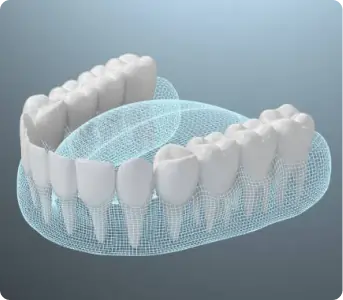
A digital impression is a 3D model of your teeth, gums and bite made with an intraoral scanner. The scanner sits on the end of a wand that looks like a larger version of the tool used to polish your teeth. The dentist moves it around your mouth as it records with light, not X-rays.
The model appears on the screen within seconds, so you see what is going on in your own mouth. Digital impressions are one part of digital dentistry at My City Dental, along with digital X-rays and the intraoral camera.
What is a digital scan used for at My City Dental?
A digital scan at My City Dental helps plan and make these treatments:
- Crowns, where the dentist takes a digital or a physical impression of the prepared tooth
- Bridges and partial dentures, which use scans, putty impressions or a mix of both
- Invisalign aligners, which are made from a digital scan
- Custom sports mouthguards
- Dental implant planning, where the scan records the gap and the teeth around it
The dentist decides whether a scan or a putty impression suits each case. Some treatments use both.
Are Digital Impressions as Accurate as Traditional Impressions?
Digital impressions and traditional impressions show no significant difference in accuracy for crowns, bridges and implant crowns. That is the finding of a 2025 overview of 28 systematic reviews in the Journal of Prosthetic Dentistry. It found no significant difference in how well the finished work fit either.
There is one exception. Traditional impressions were more accurate for complete-arch fixed bridges. The authors also rated about two thirds of the reviews as critically low in confidence. The research is not settled.
A putty impression goes to a dental lab, where a technician pours a stone model. A scan gives the lab a digital model instead. The lab still needs time to make your restoration, and the dentist recommends what comes next.
What Are the Disadvantages of Digital Impressions?
Digital impressions struggle with any area the scanner cannot see clearly or keep dry. A 2025 review in the Australian Dental Journal lists these limits:
- Edges of a prepared tooth that sit deep under the gum
- Wet or bleeding areas, because the scanner records only visible and dry surfaces
- Long spans and full arches, where accuracy drops as the scan path gets longer
- Moving gum tissue, which matters for full dentures and denture relines
- Very glossy or see-through surfaces
In those cases the dentist may still take a traditional impression or use both methods. Accuracy depends on the case: the span, the gum line and how dry the area stays.
A scan is not a promise of a perfect fit. A crown or appliance can still need small adjustments when it is fitted.
Why Do Digital Scans Help Treatment Planning?
A digital scan gives the dentist a clear 3D view of your teeth, bite and gums before treatment starts.
- The dentist and the dental lab work from the same model of your mouth
- You can see your scan on the screen and ask about it
- The dentist can review the model for missing details before sending it to the lab
- The dentist can compare a saved scan with a later one to track changes in your bite
- The scan helps plan crowns, implants and aligners
What Can Patients Expect During a Digital Scan?
A digital scan uses no impression material. Here is what happens:
- The dentist explains which teeth will be scanned and why.
- The team may dry your teeth with a little air, since the scanner reads dry surfaces clearly.
- The dentist or dental team moves the small wand around your mouth. You breathe normally the whole time.
- You bite together so the scanner records how your teeth meet.
- The model appears on the screen. Any unclear area is scanned again.
What you feel is the wand resting on your teeth and the need to keep your mouth open. Some people get a tired jaw or an urge to gag when the tip reaches the back teeth. These feelings usually pass soon after the scan. Call the clinic if jaw pain does not settle.
Tell the team before you start if your jaw is sore or you gag easily. Ask whether short breaks during the scan suit you.
What Happens to Your Scan File?
Your scan file is part of your dental record, so Ontario's Personal Health Information Protection Act applies to it. That law sets rules for how health care providers collect, use and share your health information. It also lets you ask for access to your records and for a correction if something is wrong.
When a lab makes your crown or aligners, the lab receives the scan to design the work. Ask the team who will receive your file and how it is stored. This section is general information, not legal advice.
How Much Do Digital Dental Impressions Cost?
The cost of a digital dental impression depends on the treatment it is taken for, such as a crown or aligners. Ask the team to show on your written estimate whether the scan is its own item or part of the treatment fee. Your own cost comes in a written estimate after an exam.
My City Dental offers direct insurance billing. An insurer's predetermination is an estimate of what the plan may pay, not a promise.
With the Canadian Dental Care Plan (CDCP), which My City Dental accepts, coverage depends on the service and your eligibility, and some services need preauthorization. CDCP does not cover dental implants or bridges, and orthodontic treatment such as aligners is not available under CDCP at present.
Frequently Asked Questions about Digital Impressions
Are digital dentures worth the money?
Digital dentures match traditional dentures for patient satisfaction in the research so far. They have not been shown to do better.
A 2024 systematic review in the Journal of Oral Rehabilitation found satisfaction and oral health quality of life were comparable between the two. Full dentures also rely on recording moving gum tissue, which scanners capture less well. The dentist explains which approach suits your mouth after an exam.
Can I make my own dental impressions at home?
You can buy home impression kits, but a kit records only the shape of your teeth. It is not an exam, and it cannot show decay, gum disease or a cracked tooth.
Crowns, bridges, dentures and other custom work need a dentist to check your mouth first. Thinking about a home kit for aligners? Ask a dentist what an exam would add before you order.
Does an intraoral scan use radiation?
No. An intraoral scanner records your teeth with light and a camera, not X-rays.
When the dentist needs to see inside a tooth or below the gum line, X-rays are a separate step. The dentist decides whether you need them after reviewing your history and examining your mouth.